

As global private markets continue to evolve, both individual investors and scaling companies face complex cross-border regulatory frameworks, foreign exchange…

As global private markets continue to evolve, both individual investors and scaling companies face complex cross-border regulatory frameworks, foreign exchange…

Don’t invest unless you’re prepared to lose all the money you invest. This is a high risk investment and you are unlikely to be protected if something goes wrong. Take 2 mins to learn more. Traditional football club ownership has…
We are pleased to invite you to watch the on-demand recording of our recent webinar: “The SEIS Edge: How 16 Years in AI Delivered Real Venture Returns In Conversation with Symvan Capital”. Hosted by Republic Europe, this session features Kealan…
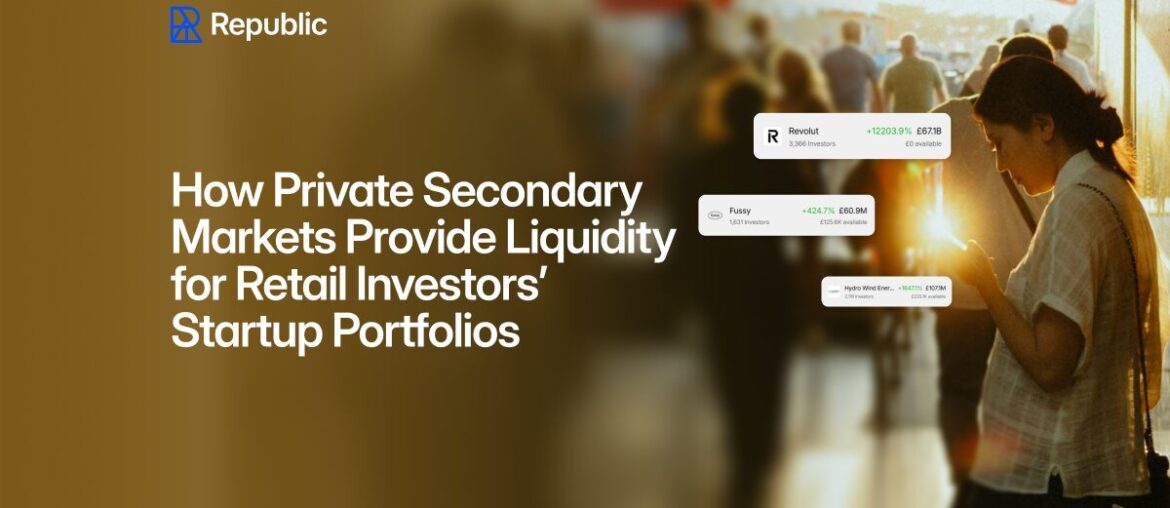
Private secondary markets refer to the trading of existing shares in private companies between investors, providing liquidity before a formal…
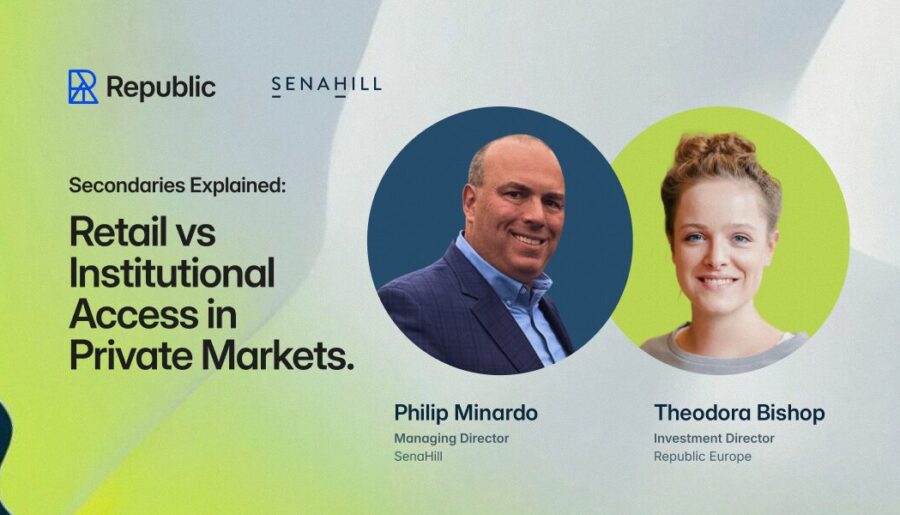
We are pleased to invite you to watch the on-demand recording of our recent webinar: “Secondaries Explained: Retail vs Institutional Access in Private Markets”. Hosted by Republic Europe, this session features Theodora Bishop, Investment Director at Republic Europe, alongside Phil…

Strategic acquisition of secondary shares in established, growth-stage startups allows individual investors to acquire equity from existing shareholders, such as early employees or angel investors outside of traditional, company-led primary funding rounds. By sourcing secondary shares, investors can gain exposure…

For generations, early-stage private equity was fundamentally a one-way street. An investor committed capital to a promising startup and accepted…
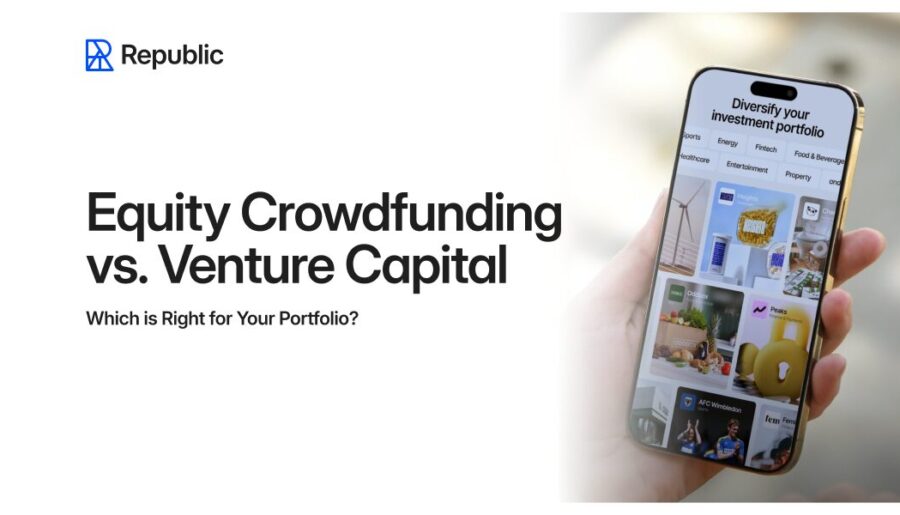
For decades, venture capital firms have maintained a near-monopoly on the highest-growth asset class in the world: early-stage private companies. Institutional allocators did not achieve their historic returns by guessing a single winner. Instead, they leveraged a mathematical reality known…

For decades, the most significant wealth creation in the technology sector has been locked behind closed doors. Great companies are staying private for longer, meaning that by the time they reach a public stock exchange, much of the initial value…